


Insights
How to Detect and Prevent SaaS Credential Sharing
Credential sharing can quietly undermine seat-based SaaS revenue and distort product analytics. Reliable detection combines several behavioral and entitlement signals, filters normal remote-work activity, and gives teams a fair evidence-led response.
What SaaS credential sharing looks like
Credential sharing happens when more than one person uses the same named-user account. It may be deliberate, such as a team circulating one password, or informal, such as a colleague helping complete a task. Occasional multi-device use is not automatically sharing.
Why it is difficult to detect
- VPNs and mobile networks change IP addresses.
- Legitimate users switch between devices.
- Remote and hybrid work changes location and timing.
- Service and administrator accounts may be intentionally shared.
- A false accusation can damage an important customer relationship.
Signals that become useful together
Overlapping sessions, implausible travel, persistent device diversity, large changes in working pattern, and activity beyond the purchased commercial profile can each contribute. Confidence rises when several persist together.
A practical workflow
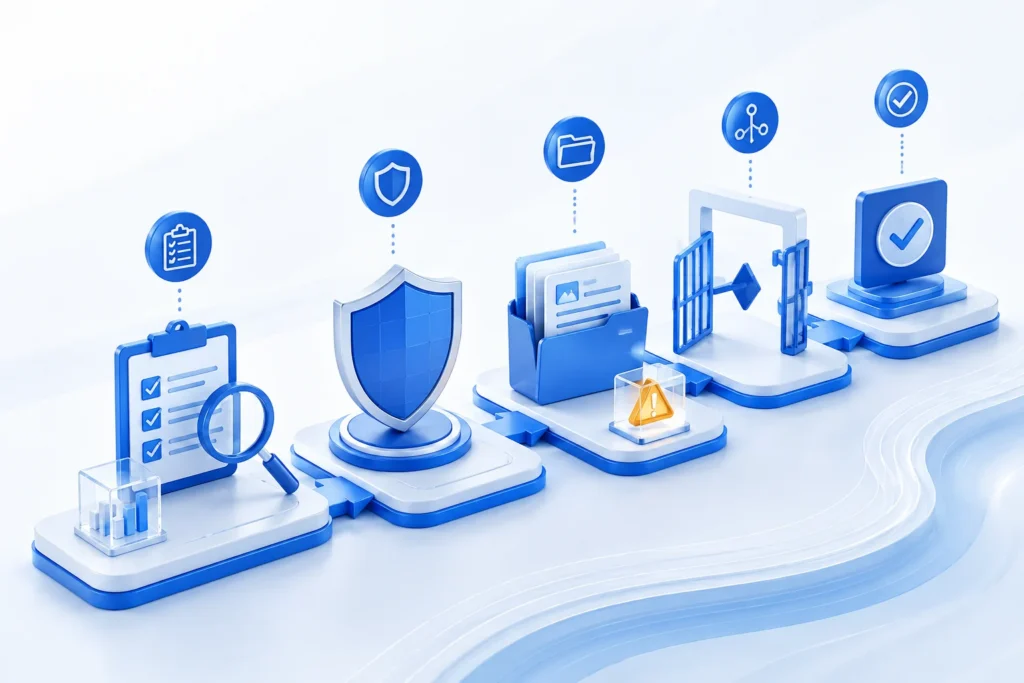
- Establish a baseline by product, account type, and license model.
- Combine signals rather than opening a case for one anomaly.
- Filter recognized VPNs, cloud systems, offices, mobile carriers, and service accounts.
- Compare behavior with entitlement and account history.
- Require human review before customer-facing action.
Prevent sharing without unnecessary friction
Vendors can educate users, provide an easy route to add seats, prompt when sharing persists, engage Sales or Customer Success, offer a better-fit plan, and reserve stronger enforcement for repeated or higher-risk non-compliance.
What good evidence includes
- What was observed and over what period.
- Which devices, sessions, or locations were involved.
- Which normal explanations were excluded.
- How activity differs from the purchased entitlement.
- The confidence, materiality, and recommended next action.
Communicate without accusing first
Customer communication should describe the observed pattern, relevant entitlement, and route to clarify legitimate use. Give the account team enough detail to ask informed questions without exposing unnecessary telemetry. Record the explanation and outcome so future cases recognize approved devices, networks, service accounts, or organizational changes. Stronger language is best reserved for repeated, material, and well-corroborated non-compliance supported by a clear evidence trail.
Frequently asked questions
Is every login from a new IP credential sharing?
No. IP data should be evaluated with device, concurrency, location, behavioral, and account signals.
Can MFA prevent credential sharing?
MFA improves security but does not always prevent intentional sharing or shared-device access. It is not a complete licensing control.
Should vendors automatically block shared accounts?
Not always. Investigation, education, and commercial engagement may recover value with less customer disruption.
Take the next step
Explore SmartFlow, review Cylynt’s software misuse solutions, or contact the team to discuss your product and license model.